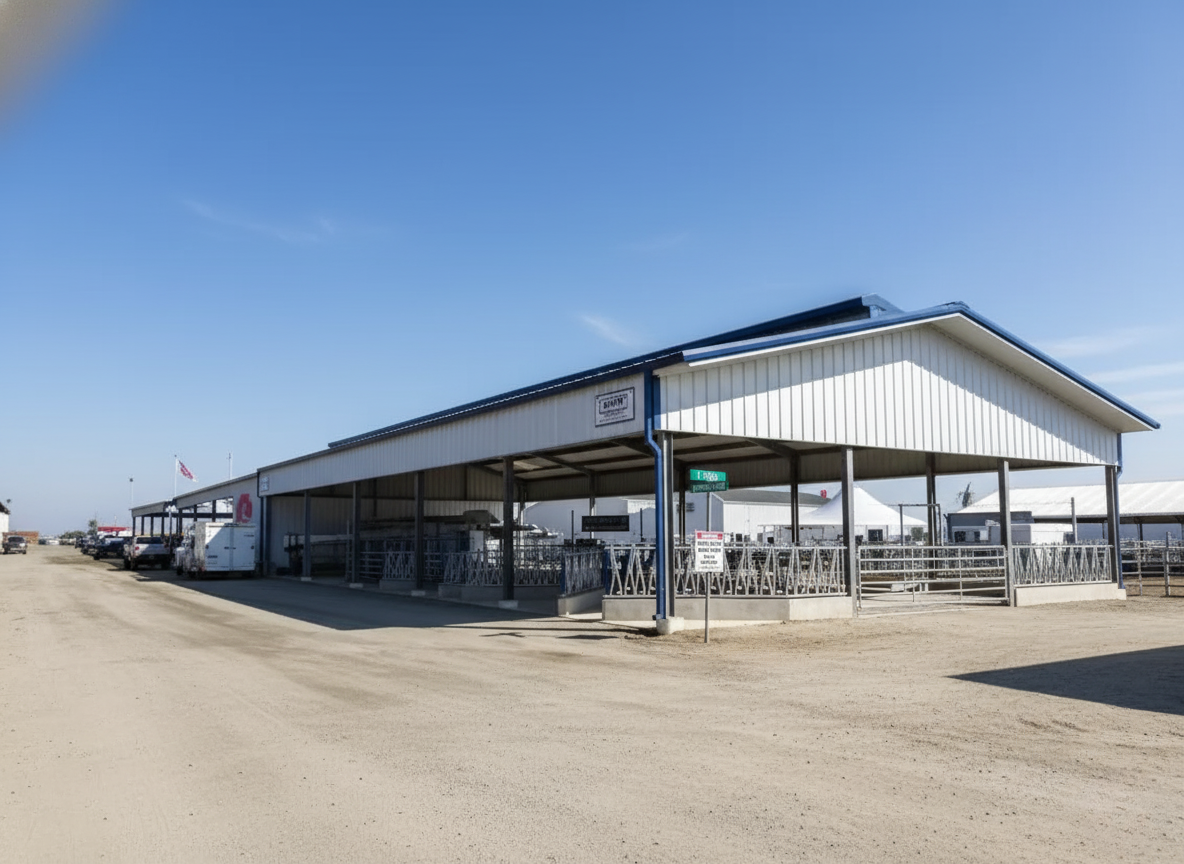
When designing or upgrading a dairy facility, choosing the right steel material is critical — not just for durability, but for long-term hygiene and cost efficiency. While both Galvanized and Galvalume steels are popular in agricultural construction, their performance differs significantly when exposed to livestock environments.
The Environment Inside a Dairy Facility
Dairy barns and milking parlors are naturally humid environments with constant exposure to moisture, cleaning chemicals, and animal waste. Ammonia, uric acid, and other compounds from livestock excrement create a highly corrosive atmosphere that challenges most coatings and finishes.
In these conditions, your steel’s surface treatment can make all the difference between decades of performance and premature rust.
Galvanized vs. Galvalume: The Key Difference
At first glance, Galvanized and Galvalume steel look similar — both are coated to prevent rust and extend service life. But the composition of their coatings is what sets them apart:
Galvanized Steel: Coated with 100% zinc.
Galvalume Steel: Coated with a mix of aluminum (55%), zinc (43%), and silicon (2%).
This difference affects how each performs in harsh environments like dairy facilities.
Why Galvanized Outperforms Galvalume in Dairy Environments
Better Resistance to Animal Waste Corrosion
The ammonia and acids present in livestock waste can react with the aluminum in Galvalume coatings, causing accelerated corrosion and rust.
Galvanized steel, coated purely in zinc, forms a protective barrier that resists these chemical reactions, making it ideal for barns, stalls, and parlors.Superior Protection Against Constant Moisture
Dairy facilities are regularly washed down to maintain hygiene. Zinc’s sacrificial protection means even if the surface is scratched, the surrounding zinc continues to protect the steel beneath — something Galvalume cannot do as effectively in wet, acidic environments.Simpler Maintenance, Longer Life
With Galvanized steel, maintenance is straightforward. Routine cleaning and ventilation can keep the panels performing for years without special coatings or replacements, reducing downtime and costs.Proven Track Record in Agriculture
For decades, galvanized steel has been the trusted standard for agricultural buildings — not just for roofs and walls, but also for feed troughs, pipe rails, and ventilation structures. Its consistent performance in high-moisture, high-ammonia settings makes it the material of choice for dairy operators.
When to Use Galvalume
While Galvalume performs exceptionally in dry, non-corrosive conditions — such as residential roofing or industrial warehouses — it is not recommended where it comes into contact with animal waste, fertilizers, or manure gases. Its aluminum component breaks down under these conditions, leading to early coating failure and corrosion.
Final Takeaway
When building for the dairy industry, longevity and sanitation are non-negotiable. Galvanized steel provides the reliability and protection your facility needs — resisting corrosion, maintaining a clean surface, and ensuring long-term performance even under demanding conditions.